在售楼盘

/_nuxt/properties.BFjmEJ9_.webp
热门新盘
/_nuxt/for_sale.DecAXIP_.webp
最新发布
/_nuxt/upcoming.hsOaqdaz.webp
即将推出
/_nuxt/view_all.ZfDwfmCJ.webp
全部楼盘

为您精选的出售房源

Kerrisdale
S$ 1,950,000
33
Belgravia Ace
S$ 5,190,000
56
Geylang lorong 24A
S$ 4,080,000
42

为您精选的出租房源

Bishan Loft
S$ 2,200/月
11
Grand Dunman
S$ 2,500/月
11
Affinity At Serangoon
S$ 3,700/月
22

让我们来指导您如何买房或租房

Singapore Condo Buying Process: From OTP to Completion
Buying a Condo in Singapore involves several important steps, from the time the buyer and seller agree on the price to the final handover of the property. For first-time buyers, the confusing part is often not choosing a property, but understanding what to do after signing the OTP, when payments are due, when to arrange financing, and when the transaction is considered complete.In simple terms, the resale process for a Condo in Singapore can generally be summarised as:Agreeing on the price → Seller issues the OTP → Option Period → Buyer decides whether to exercise the OTP → Stamp duty and loan arrangements → Lawyer handles the transfer of ownership → Completion → Property handoverThis article focuses on the main steps from OTP to Completion, helping buyers build a clear timeline of the transaction.1. Signing the OTP: The Transaction Enters a Formal StageOTP stands for Option to Purchase.Once the buyer and seller have agreed on the price and other key terms, the seller will issue an OTP to the buyer. After paying the Option Fee, the buyer obtains the right to purchase the property in accordance with the OTP terms within the agreed period. Signing the OTP does not mean that the buyer has exercised the option; the buyer must still exercise it in accordance with the OTP within the Option Period.The OTP will generally specify:• The purchase price;• The Option Fee;• The Option Period;• The method, deadline and requirements for exercising the OTP;• Completion arrangements.For buyers, signing the OTP marks an important stage in the transaction. Before signing, buyers should confirm the purchase price, borrowing capacity, cash and CPF arrangements, and other key transaction terms. It is best to assess loan eligibility and prepare funds early, as the time available after the OTP is issued is usually limited.2. Option Period: The Buyer Decides Whether to Exercise the OTPAfter signing the OTP, the buyer enters the Option Period. This is an important window for deciding whether to proceed with the purchase in accordance with the OTP terms.During this period, the buyer will generally need to complete or confirm several key matters, including:• Confirming the bank loan arrangements and loan terms;• Confirming cash and CPF arrangements;• Appointing a lawyer to handle the property transaction;• Having the lawyer review the OTP and conduct the relevant title and legal checks;• Confirming arrangements for paying stamp duties and other costs.If the buyer decides to proceed, the buyer must exercise the OTP in the manner specified and within the deadline stated in it. After the OTP is exercised, the buyer and seller are generally required to proceed with the transaction in accordance with the contract. The buyer must also pay the Exercise Fee, if applicable, and fulfil the subsequent payment and transaction obligations.If the buyer does not exercise the option within the specified period, the OTP will generally lapse and the buyer will lose the right to purchase the property under that OTP. The Option Fee is generally forfeited to the seller, but its treatment depends on the specific OTP terms. After signing the OTP, buyers should therefore confirm the Option Period expiry date, the method of exercise and any related payment requirements.3. Exercise OTP: Formally Exercising the Purchase OptionExercising the OTP means that the buyer formally exercises the right to purchase the property.Simply put:Seller issues the OTP = The buyer obtains the option to purchase the property within the agreed periodBuyer exercises the OTP = The buyer exercises that option in accordance with the OTP termsThe buyer must exercise the OTP in the manner and within the period specified in it. This usually involves signing and delivering the exercise portion of the OTP and paying the agreed Exercise Fee, if applicable.Once the OTP has been validly exercised, both parties are generally required to proceed with the sale in accordance with the transaction documents. The buyer should not treat the transaction as an ordinary “reservation” that can be cancelled at will. If the buyer subsequently fails to complete the transaction, this may result in a breach of contract and related legal and financial consequences, depending on the contract terms and circumstances.Buyers should therefore confirm their loan arrangements, funding and key transaction terms as far as possible before exercising the OTP. After exercising it, the buyer must still fulfil the agreed payment, stamp duty and other transaction obligations.4. Paying Stamp Duty: BSD and ABSDWhen purchasing a Condo in Singapore, buyers also need to account for property stamp duties.Two common types are:BSD (Buyer’s Stamp Duty)BSD is generally payable when purchasing property in Singapore. It is usually calculated on the higher of the purchase price or market value and is charged at the applicable progressive rates.ABSD (Additional Buyer’s Stamp Duty)Whether ABSD is payable and the applicable rate depend on factors such as the buyer’s profile and the number of residential properties already owned. The applicable rate is generally determined by the buyer’s status and circumstances at the time of purchase.BSD and ABSD are generally payable within 14 days after the relevant purchase document is signed in Singapore. If the document is signed overseas, they are generally payable within 30 days after it is received in Singapore. Buyers should include stamp duties in their overall purchase budget, rather than calculating only the property price and down payment. The lawyer should confirm the amounts, applicable rates and payment deadlines based on the buyer’s circumstances and transaction documents.5. Lawyer Handles Conveyancing: Completing the Property TransferAfter the OTP has been exercised, the lawyer will continue handling the legal process for the property transaction, commonly known as conveyancing.In simple terms, the lawyer handles the legal and title-related procedures required for the transaction, helping the parties complete the sale in accordance with the transaction documents and arranging for the transfer of ownership.The main work includes:• Reviewing the property title and relevant registration information;• Reviewing and preparing the legal documents required for the transaction;• Communicating with the seller’s lawyer;• Coordinating with the bank and lending institution, where applicable;• Preparing the legal documents required for Completion;• Checking the transaction terms, source of funds and payment arrangements.At this stage, the buyer mainly needs to provide the lawyer with the required information, sign documents and make the necessary funding and loan arrangements.For buyers, the process can be understood simply as follows:The OTP and its exercise establish whether the buyer is proceeding with the purchase under the agreed terms; conveyancing deals with the legal procedures and prepares for payment, transfer of ownership and handover at Completion.6. Bank Loan, Cash and CPF: Preparing the Purchase FundsThe funds for a Condo transaction generally come from three main sources:Cash + CPF + Bank LoanThe conditions, uses and payment timing for each source may differ. Buyers should plan their funding throughout the transaction in accordance with the OTP, loan documents and the lawyer’s payment instructions, rather than preparing only a single “down payment”.CashThe buyer will generally need to prepare part of the down payment, as well as stamp duties, legal fees and other related costs. The Option Fee and any amount payable when exercising the OTP must also be paid in the manner specified in the OTP. Some payments may be due before Completion; the amounts and timing depend on the transaction documents and the lawyer’s instructions.CPFSubject to CPF requirements, buyers may apply to use their CPF Ordinary Account (OA) savings to pay part of the purchase price, stamp duties, legal fees and related costs, or to service a housing loan. The amount that can be used is subject to CPF rules and conditions, including the property’s valuation and remaining lease. CPF funds must be applied for through the lawyer and are not automatically available.[3]Bank LoanIf the buyer is purchasing the Condo with a bank loan, the buyer should complete the loan application, valuation and loan documents in good time and satisfy the bank’s disbursement conditions. The bank will disburse the loan in accordance with the loan documents and transaction arrangements, usually with the lawyer coordinating the funds for payment of the purchase price balance at Completion.Buyers should plan for payments at each stage, including OTP-related payments, stamp duties, legal fees, the Completion balance and other costs. They should also set aside funds in case the valuation is lower than the purchase price or the available loan or CPF amount is insufficient.7. Completion: The Property Transaction Is Officially CompletedCompletion is an important stage at which the buyer and seller complete the payments, transfer of ownership and other transaction procedures in accordance with the transaction documents.Completion will generally involve:• The buyer paying the remaining purchase price using cash, approved CPF funds and the bank loan;• The buyer’s and seller’s lawyers completing the transfer of funds and documents;• Repayment of the seller’s outstanding housing loan, if applicable, and completion of the related procedures;• Registration of the transfer of ownership;• Handover of the property and keys as provided for in the transaction documents.The Completion Date is specified in the transaction documents. The bank loan and CPF funds usually need to be available before or on Completion, as arranged by the lawyers. The buyer should ensure that all funds and documents requested by the lawyer are ready.Before Completion, the buyer should confirm that:• The loan has been approved, the relevant documents have been signed, and the bank’s disbursement conditions have been met;• The CPF application and funding arrangements have been handled as required;• The required cash is available and will be paid in accordance with the lawyer’s instructions;• BSD, any applicable ABSD and other costs have been paid by the relevant deadlines;• All documents requested by the lawyer have been signed or submitted.Completion is not simply a matter of signing documents; it is the legal stage at which the transaction’s payments, transfer of ownership and other completion procedures are carried out in accordance with the agreement. However, the transfer of ownership and physical handover do not always take place at the same time. The handover date and whether the property must be vacant depend on the transaction documents.8. After Completion: Collecting the Keys and Taking Over the CondoAfter Completion, the buyer will generally take possession of the property and receive the keys in accordance with the transaction documents. If vacant possession is agreed, the keys and access devices are usually handed over around Completion. If the property is sold subject to an existing tenancy, the buyer must take over the property in accordance with the tenancy and transaction documents and may not be able to move in immediately after Completion.The handover will generally involve:• Collecting the property keys, access cards and related devices;• Liaising with the Condo’s MCST or Managing Agent;• Checking the condition of the property and any items agreed to remain;• Arranging water and electricity accounts as required;• Confirming the existing tenancy, rent, deposit and tenant handover arrangements, if applicable.If the property is to be delivered vacant under the agreement, the buyer can arrange renovation, own occupation or rental according to their plans. If it is sold subject to an existing tenancy, the buyer should confirm the tenancy period, rent, deposit, obligations under the tenancy and handover arrangements, and take over the property as agreed.Completion is an important transaction milestone, but the handover arrangements and subsequent management matters should still be checked against the transaction documents and the property’s actual condition.9. The Condo Transaction Process at a GlanceThe process can be summarised as follows:Buyer and seller agree on the price↓Seller issues the OTP and the buyer pays the Option Fee↓Option Period↓Buyer confirms loan, legal arrangements and funding↓Buyer decides whether to exercise the OTP within the deadline↓After the OTP is exercised, both parties proceed in accordance with the transaction documents↓BSD and any applicable ABSD are paid by the statutory deadlines↓Lawyer handles conveyancing↓Bank loan, CPF and cash funds are arranged as required↓Completion: payment and transfer of ownership are completed↓Property is handed over and the buyer collects the keys or takes over the Condo as agreed10. Key Dates Buyers Need to RememberFirst-time Condo buyers do not need to memorise every technical term, but they should understand these key dates:① OTP DateWhen is the OTP signed, and when does the Option Period begin?② Option PeriodHow long does the buyer have to decide whether to proceed in accordance with the OTP terms?③ Exercise DeadlineWhat is the latest date by which the buyer must exercise the OTP in the required manner?④ Stamp Duty DeadlineWhen are BSD and any applicable ABSD due? The payment deadline generally runs from the date the relevant purchase document is signed. If the document is signed overseas, the deadline generally runs from the date it is received in Singapore. The lawyer should confirm the applicable document and deadline.⑤ Completion DateWhen must final payment and the transfer of ownership be completed? Whether the property handover or key collection takes place on the same date also depends on the transaction documents.These dates run throughout the transaction. Missing a deadline or failing to prepare funds in time may result in a breach, additional costs or disruption to subsequent arrangements.ConclusionBuying or selling a Condo in Singapore does not end with signing the OTP; the transaction moves into the execution stage from that point onwards.The process can be summarised as:Seller issues the OTP → Option Period → Exercise OTP → Stamp duty and funding arrangements → Conveyancing → Completion → Handover as agreedFor buyers, the main priorities are to confirm loan arrangements, prepare funds for each stage and keep track of the key dates. Understanding when each stage takes place, what needs to be done and when payments are due can make the transaction clearer and help reduce problems caused by inadequate funding or timing arrangements.
Complete Financial Planning for Buying a Condo in Singapore: From Purchase Price to Hidden Costs
Buying a condo in Singapore involves much more than paying the purchase price. Buyers should also consider upfront taxes, transaction costs, financing costs, ongoing ownership expenses and potential hidden costs.A sound financial plan should therefore consider not only “Can I afford this property?” but also “How much will this property actually cost me over the entire ownership period?”1. The Purchase Price Is Only the Starting PointThe condo purchase price is the starting point of your financial planning, but it is not the total amount you may need to pay.Before deciding to buy a property, buyers should consider:• The purchase price• The down payment• Cash and CPF requirements• The bank loan amount• BSD and ABSD• Legal and transaction fees• Renovation and furnishing costs• Ongoing mortgage repayments• Property tax and maintenance fees• Potential costs when selling the propertyFor new launches, payments are generally made progressively according to construction milestones, while resale condos usually follow a different payment timeline.Key point: Do not use all your available cash for the down payment. Set aside funds for taxes, fees, renovation and future ownership costs as well.2. Upfront Taxes: BSD and ABSDStamp duties are among the most significant costs to include in your upfront purchase budget.Buyer’s Stamp Duty (BSD)BSD is calculated based on whichever is higher: the purchase price or the market value of the property. Residential properties are subject to progressive BSD rates, with a top marginal rate of 6%. The actual BSD payable depends on the property value and the applicable rate bands.BSD can therefore be substantial for higher-value condos.Additional Buyer’s Stamp Duty (ABSD)ABSD depends on factors including:• The buyer’s residential status• The number of residential properties the buyer already owns• The buyer’s profile and ownership structureUnder the applicable rules, Singapore Citizens purchasing their first residential property do not pay ABSD. Permanent Residents purchasing their first residential property and foreigners purchasing residential property are subject to different ABSD rates. Higher rates may also apply to buyers purchasing additional residential properties.ABSD can significantly increase the total funds required, particularly for foreign buyers, Permanent Residents and buyers purchasing a second or subsequent residential property. The applicable rate depends on the buyer’s profile and the transaction.3. Transaction Costs: More Than Just Stamp DutyIn addition to BSD and ABSD, buyers should budget for other transaction-related expenses, including:• Legal fees• Bank loan-related fees• Mortgage registration and related administrative fees• Valuation fees, where applicable• Other administrative expenses• Agent commission, depending on the transaction arrangementsThese costs may be relatively small compared with the property price, but they should still be included in the overall purchase budget.Do not assume that paying the stamp duties means all upfront purchase costs have been covered.4. Financing Costs: Look Beyond the Monthly MortgageFor buyers taking out a bank loan, financing-related costs should also be included in the overall budget. These may include:• Legal fees and disbursements: For example, costs relating to the transfer of title, loan documents, registrations and searches.• Bank loan-related fees: Such as loan processing or documentation fees, depending on the bank and loan package.• Mortgage registration and related administrative fees: These are generally handled by the lawyer as part of registering the mortgage.• Valuation fees: A fee may apply if the bank requires a valuation. Whether it is charged or subsidised depends on the loan arrangements.• Other administrative fees: For example, title searches and document registration.• Agent commission: This depends on the agency arrangement, engagement agreement and the parties’ agreement; buyers should not assume they will necessarily have to pay a separate commission.These fees may be modest compared with the property price, but should still be included in the overall purchase budget. Paying BSD and ABSD does not cover all upfront purchase costs. Confirm the applicable fees with your lawyer, bank and agent.5. Ongoing Costs of Owning a CondoAfter completion, owners continue to incur ongoing ownership costs.Property TaxSingapore property tax is calculated based on the property’s Annual Value (AV) and the applicable tax rates. Residential properties occupied by their owners are subject to owner-occupier rates, while non-owner-occupied residential properties are subject to different rates.Maintenance FeesCondo owners generally pay maintenance or management fees to cover the operation, upkeep and repair of the development’s common areas and facilities. The amount and payment arrangements vary by development and may depend on factors such as unit size, unit type or the method used to allocate expenses. Some developments may also impose special levies for major repairs.Mortgage InterestFor a property purchased with a loan, mortgage interest is a significant cost during the ownership period. The repayments will depend on factors such as the loan amount, interest rate and loan tenure.Insurance, Repairs and Replacement CostsOwners should budget for relevant home insurance, repairs within the unit, appliance replacement and unexpected maintenance. The coverage and costs will depend on the insurance policy, the property’s condition and the repairs required.When calculating the long-term cost of owning a property, include the costs above, together with mortgage principal repayments, day-to-day expenses and any special repair costs that may arise.6. Commonly Overlooked Additional CostsWhen preparing a purchase budget, buyers should consider the following expenses in addition to the purchase price, stamp duties and regular ownership costs:• Renovation costs• Furniture and appliances• Moving expenses• Vacancy costs, including any period before moving in and gaps between tenants; mortgage repayments and maintenance fees may continue during these periods• Rental-related expenses, such as repairs, cleaning and agent fees• Unexpected property maintenance and repair costs• Costs of refinancing or repricing a loan, such as valuation, legal or bank fees• Potential early repayment charges, subject to the terms of the loan• Agent commission and legal fees that may arise when selling the property• Seller’s Stamp Duty (SSD), if applicableIndividual expenses may seem modest, but they can accumulate over time and significantly affect the total cost of ownership and investment returns. Actual costs should be estimated based on the loan terms, rental plans, property condition and expected holding period.7. Owner-Occupied vs. Investment PropertyYour financial plan should reflect how you intend to use the condo.For an owner-occupied property, the main costs to consider include:• The down payment and mortgage repayments• BSD, ABSD if applicable, and transaction costs• Property tax• Maintenance fees• Renovation, furniture and appliances, if needed• Insurance, repairs and routine maintenanceFor an investment property, buyers should also assess:• Expected rental income and its tax implications• Vacancy periods and costs incurred when tenants change• Agent fees related to renting out the property• Tenant-related repairs, cleaning and management expenses• Ongoing ownership costs, including loan repayments, property tax, maintenance fees and insuranceAn investment property should be assessed by considering rental income, vacancy risk and total ownership costs—not rental income alone.8. Build a Complete Condo Purchase BudgetA practical way to organise the financial requirements is to divide them into five categories:1) Purchase PriceThe agreed price of the condo.2) Upfront CostsThe down payment, BSD, ABSD if applicable, legal fees and other transaction costs.3) Financing CostsMortgage interest and other loan-related fees. Mortgage principal repayments are part of the cash flow used to repay the financing for the purchase; they should not be added to the purchase price again when calculating total costs.4) Holding CostsProperty tax, maintenance fees, insurance, repairs, renovation and other ongoing expenses. For investment properties, this category should also include vacancy periods and rental-related expenses.5) Exit CostsPotential agent commission, legal fees and SSD when selling the property.This approach helps distinguish the funds needed at purchase, cash flows during ownership and potential costs when selling.9. Calculating the Overall Cost and Cash RequiredA useful framework for estimating the overall cost over the holding period is:Overall cost = Purchase price + purchase taxes and transaction costs + loan interest + holding costs + renovation and repair costs + selling costsMortgage principal is the financing used to purchase the property and the amount repaid over time. It should not be added to the purchase price as a separate cost. When calculating investment returns, rental income and other cash flows should also be included.Cash required is not simply the purchase price multiplied by the down-payment percentage. Buyers may also need funds for BSD, ABSD if applicable, legal fees, loan-related fees, renovation and other expenses that cannot—or will not—be paid using a loan or CPF. The actual cash requirement depends on the loan terms, CPF usage and payment schedule.ConclusionBuying a condo in Singapore is a long-term financial commitment. In addition to assessing whether the purchase price is affordable, buyers should consider the upfront funds required, cash flow throughout the ownership period and potential costs when selling.The budget should account for BSD, ABSD if applicable, mortgage interest, maintenance fees, property tax, renovation, vacancy periods and selling costs. A sound purchase plan should be based on a complete assessment of costs and cash flow, rather than focusing only on the advertised property price or initial down payment.
Freehold vs Leasehold Property in Singapore: Which Is Better?
When buying property in Singapore, one of the key decisions is whether to choose a freehold or leasehold property. Freehold property generally has no fixed lease expiry date, while leasehold property is held for a fixed term, commonly 99 years.But does freehold always offer better value? Not necessarily. The right choice depends on your budget, lifestyle needs, investment objectives and intended holding period.This guide compares freehold and leasehold property in Singapore to help you make a more informed decision.1. What Is the Difference Between Freehold and Leasehold Property?What Is a Freehold Property?A freehold property generally has no fixed lease expiry date. This may appeal to buyers who value long-term ownership or wish to pass the property on to future generations.However, freehold tenure does not guarantee capital appreciation. A property's value still depends on factors such as location, demand, condition, purchase price and market conditions.What Is a Leasehold Property?A leasehold property is held for a specified term. In Singapore, many private residential developments and HDB flats have 99-year leases, while some properties have 999-year leases.As the lease runs down, the remaining lease may affect the property's value, financing options and resale demand.2. Freehold vs Leasehold: 5 Key DifferencesPurchase PriceFreehold properties may cost more than comparable leasehold properties because of their tenure and appeal to buyers seeking long-term ownership. However, the price difference varies by location, development quality, age, remaining lease and market demand.Leasehold properties may offer a lower entry price, potentially allowing buyers to consider more central locations or newer developments within their budget.Capital AppreciationFreehold tenure may appeal to buyers seeking long-term ownership, but tenure alone does not determine price growth.A well-located leasehold condominium with strong transport links, amenities and buyer demand may outperform a freehold property in a less desirable location. The purchase price and future market conditions also matter.Lease Decay and Remaining LeaseLease decay is an important consideration when buying leasehold property. As the remaining lease decreases, the property may become less attractive to some buyers, and its valuation may be affected.The remaining lease may also affect financing options and the use of CPF savings, subject to the applicable rules. Buyers should check when the lease commenced rather than assume it began when the current owner purchased the property.Resale ValueFreehold properties may appeal to buyers who prefer not to be affected by a fixed lease expiry date. However, resale demand still depends on affordability, location, property condition and market conditions.For leasehold properties, the remaining lease becomes increasingly important over time. Buyers considering resale should assess the likely target market and whether financing restrictions could narrow the pool of potential purchasers.Long-Term OwnershipFreehold properties may suit buyers planning to hold a property for decades or pass it on to future generations.Leasehold properties can also be suitable for long-term homeowners, particularly when the remaining lease is sufficient for their intended holding period. Buyers should understand the lease timeline and plan accordingly.3. Which Is Better for Different Types of Buyers?First-Time HomebuyersFirst-time buyers should prioritise affordability, monthly mortgage payments and lifestyle needs. A suitable leasehold property may provide access to a preferred location without requiring the buyer to stretch their budget.Property InvestorsInvestors should compare rental demand, expected rental yield, purchase price, maintenance costs and resale prospects. Freehold tenure alone does not guarantee better investment returns.Families Buying for Long-Term OccupancyFamilies planning to stay for many years may prefer freehold properties because there is no fixed lease expiry date. However, a well-maintained leasehold home can also be a practical choice if its remaining lease suits the family's plans.Buyers Considering Older Leasehold PropertiesOlder leasehold properties require closer assessment. Before committing, check the remaining lease, financing options, CPF usage restrictions, property condition and potential resale demand.4. What Should You Check Before Buying?Before purchasing a freehold or leasehold property in Singapore, consider the following:• Verify the tenure: Confirm the legal tenure and, for leasehold property, the lease commencement date and remaining lease.• Compare recent transactions: Review prices of similar properties in the same area, taking differences in tenure and remaining lease into account.• Check financing and CPF rules: Confirm the applicable requirements based on the remaining lease and the buyers’ circumstances.• Calculate ownership costs: Include mortgage payments, Buyer’s Stamp Duty (BSD), any applicable Additional Buyer’s Stamp Duty (ABSD), maintenance fees, property tax and other relevant expenses.• Assess your exit strategy: Consider how long you intend to hold the property and the potential resale market.These steps can help you evaluate a property beyond its tenure label.5. Final Verdict: Freehold or Leasehold in Singapore?So, which is better: freehold or leasehold property in Singapore?Freehold may suit buyers who value having no fixed lease expiry date and have the budget for a suitable property. Leasehold may be a better fit for buyers seeking a lower entry price, a preferred location or a particular investment opportunity.Ultimately, the better choice depends on your financial position, the property’s fundamentals and your long-term goals. Compare individual properties carefully rather than assuming one tenure is always superior.Find your ideal property with Housebell, featuring property listings for sale and rent across Singapore. All listings are properties represented by genuine CEA-registered property agents. Explore homes with innovative features, including 3D Models, VR Tours and HD Videos, and discover your next home with confidence.
Thomson Reserve:新加坡这个新公寓值得购买吗?
Thomson Reserve 是新加坡 2026 年值得关注的新公寓项目之一。项目位于上汤申(Upper Thomson)Bright Hill Drive,第 20 邮区,主打地铁交通便利、丰富的绿化空间,以及覆盖不同需求的住宅户型。但它的吸引力是否足以支撑售价?下面从优势、潜在风险到适合人群,帮你把关键点一次理清。1. 项目概况与价格Thomson Reserve 是一个 99 年地契公寓项目,由 UOL Group、Singapore Land Group 和 CapitaLand Development 联合开发。项目由 6 栋住宅楼组成,共有 1,268 套单位,户型涵盖两房公寓至五房套房。产品分为两大系列:分布于 21 层楼栋的 740 户 Classic Collection,以及两座 30 层高楼内的 528 户 Luxury Collection。公众预览于 2026 年 10 月 17 日开始,正式开售日期为 2026 年 10 月 31 日。参考起价包括:• 两房单位: S$154.4万起• 三房单位: S$250.3万起• 四房单位: S$338.8万起• 五房单位:待定项目参考起价约为每平方英尺 S$2,608。买家在作出购买决定前,应核实最终价单。2. 四大核心卖点自然环境与成熟社区项目位于中央集水区自然保护区(Central Catchment Nature Reserve)附近,提供更绿意盎然的居住环境,同时日常生活也可衔接周边成熟配套。便捷的地铁交通项目通过有盖步行通道直接连接汤申上段地铁站(Upper Thomson MRT),走路一分钟,该站属于汤申—东海岸线(Thomson–East Coast Line)。对自住而言,这提升日常通勤效率;对投资而言,也可能增强项目对租客的吸引力。成熟的开发商背景UOL Group、Singapore Land Group 和 CapitaLand Development 联手打造,能为整体项目品质与交付管理提供更具参考价值的保障。丰富的园林与设施项目约 88% 地块用于绿化、水景和休闲设施。规划的休闲设施超过 80 项,主打“度假式”生活氛围。3. 需要考虑的潜在风险点较高的入场价格项目起价超过每平方英尺 S$2,600,高楼单位仍可能突破 $3,000/尺。买家需要把资金压力纳入评估,包括总购房价、贷款还款额、印花税及其他持有成本。大型项目内部的竞争项目共有1,268套单位,未来出售或出租时,业主可能需要与同一项目内提供相似户型的其他业主竞争。实际转售和租赁表现将取决于市场需求和整体市场状况。等待交付及持有成本项目预计于 2030 年第二季度交付。买家需要综合考虑融资成本、市场环境变化,以及在房产尚未产生资产增益与租金收入之前的资金占用与机会成本。4. Thomson Reserve 适合哪些人?• 年轻夫妻: 重视地铁交通、生活配套及面积适中的居住空间。• HDB升级家庭: 希望改善居住空间,且出售组屋所得资金和贷款能力足以支持购买私宅的家庭。• 高收入家庭: 重视绿化环境、休闲设施和较大户型的买家。• 长期投资者: 愿意仔细评估租赁需求、净租金收益、持有成本和退出策略的投资者。对预算紧张、希望快速转售获利,或主要依赖较高租金现金流覆盖持有成本的买家而言,该项目的小户型单位可能更需要谨慎挑选。5. 最终判断:受欢迎不等于物有所值Thomson Reserve 的核心吸引力在于地铁交通、自然环境、成熟的开发商背景和丰富的配套设施。需要重点关注的仍是入场价格、较长的交付等待时间,以及同类单位在未来市场中的竞争情况。最终,项目是否值得购买,取决于你的实际购入价格、财务状况以及预期持有期限与退出路径。
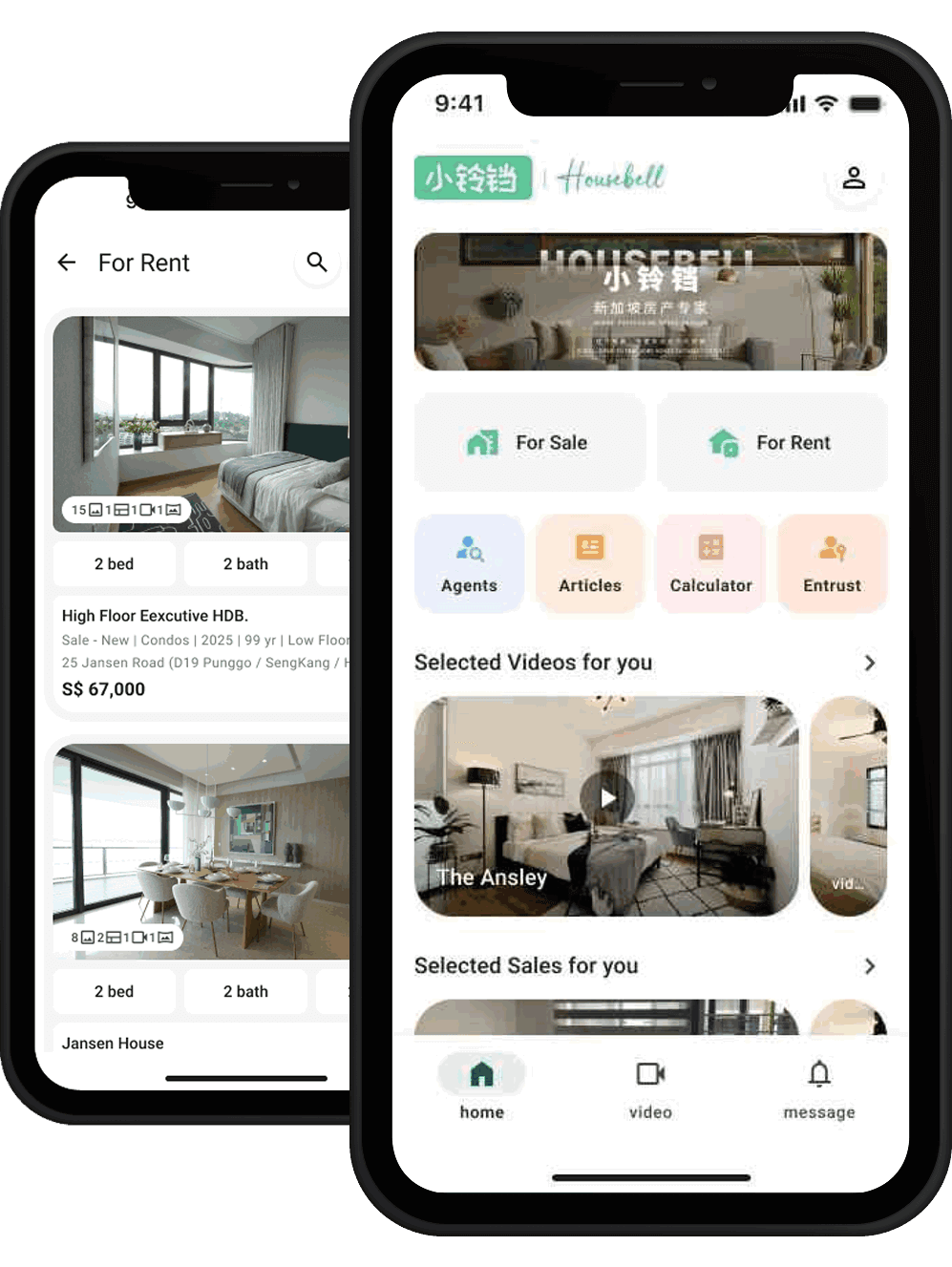
下载 Housebell-APP,体验更多购房功能
闲置二手 & 购房社区 & 购房问答 & 家政服务 & 精准推荐

新加坡HDB、公寓及有地住宅买卖与租赁